Why Round Pools Work Well in Narrow or Irregular Backyards
Not every backyard is a neat rectangle. Some are squeezed between a fence and a driveway, some wrap around the side of the house, and some have an old maple standing exactly where a pool would go. In spaces like these, a round pool is often the shape that fits without taking over the whole yard. It needs less clearance, leaves more usable ground around it, and slips into spots where a long rectangle would block every path.
## Why Round Pools Are a Good Choice for Small or Unusual Backyard Layouts
A circle has no corners, and corners are usually where trouble starts. On a tight lot, it's the corner of a rectangular pool that runs into the fence line, the property setback, or the edge of the patio. A round pool keeps the same distance from everything around it, so meeting local setback rules and still leaving a walkway is much easier.
There's a structural advantage as well. Water pushes evenly against a curved wall, with no weak joints where pressure builds up. That's why steel tank pools are built round: the shape does part of the engineering work, and the pool keeps its form season after season.
StainlessSwim builds round above-ground pools from galvanized steel in diameters from 9 to 21 feet. The company runs the whole project, from excavation and leveling to plumbing and installation, so homeowners don't have to juggle separate contractors for each stage. One team handles the job from the first site visit to the day the pool is filled.
## How Round Pools Make Better Use of Limited Backyard Space
A 12-foot round pool takes up about 113 square feet. A 10-by-16-foot rectangle needs 160 square feet, and it also demands clear space along both long sides. In a small yard, that difference decides whether you still have room for a grill and a couple of chairs.
The curve also creates useful leftover pockets. The spaces between a circle and the corners of a yard are perfect for a lounger, a planter, or the pump and sand filter, which then stay out of the main traffic path. With a rectangle, those same corners usually turn into strips too thin to use.
### Fitting Into Narrow and Irregular Spaces
In a narrow yard, width is the real limit. On an 18-foot-wide lot, a 12-foot pool still leaves three feet on each side for walking and maintenance. In L-shaped, wedge-shaped, or tapered yards, a circle settles into the widest section, and the rest of the yard stays open. A simple test helps: measure the largest circle that fits without touching fences or trees, then subtract a couple of feet for access.
## Round vs. Rectangular Pools for Narrow Backyards
To be fair, a rectangle wins if you want to swim laps. But in a narrow yard, a lap-friendly pool usually runs along the long side and leaves nothing but a thin strip of grass. Most families use a backyard pool to cool off, soak after work, or let the kids splash around, and a round pool handles all of that well.
Round pools are also simpler to build. The liner fits a curved wall without folds at the corners, and the frame needs less bracing. With a standard depth of 46 inches, and the option to go up to 5 feet with StainlessSwim, a round tank pool still feels like a real pool rather than a compromise.
## Design Ideas for Round Pools in Irregular Backyards
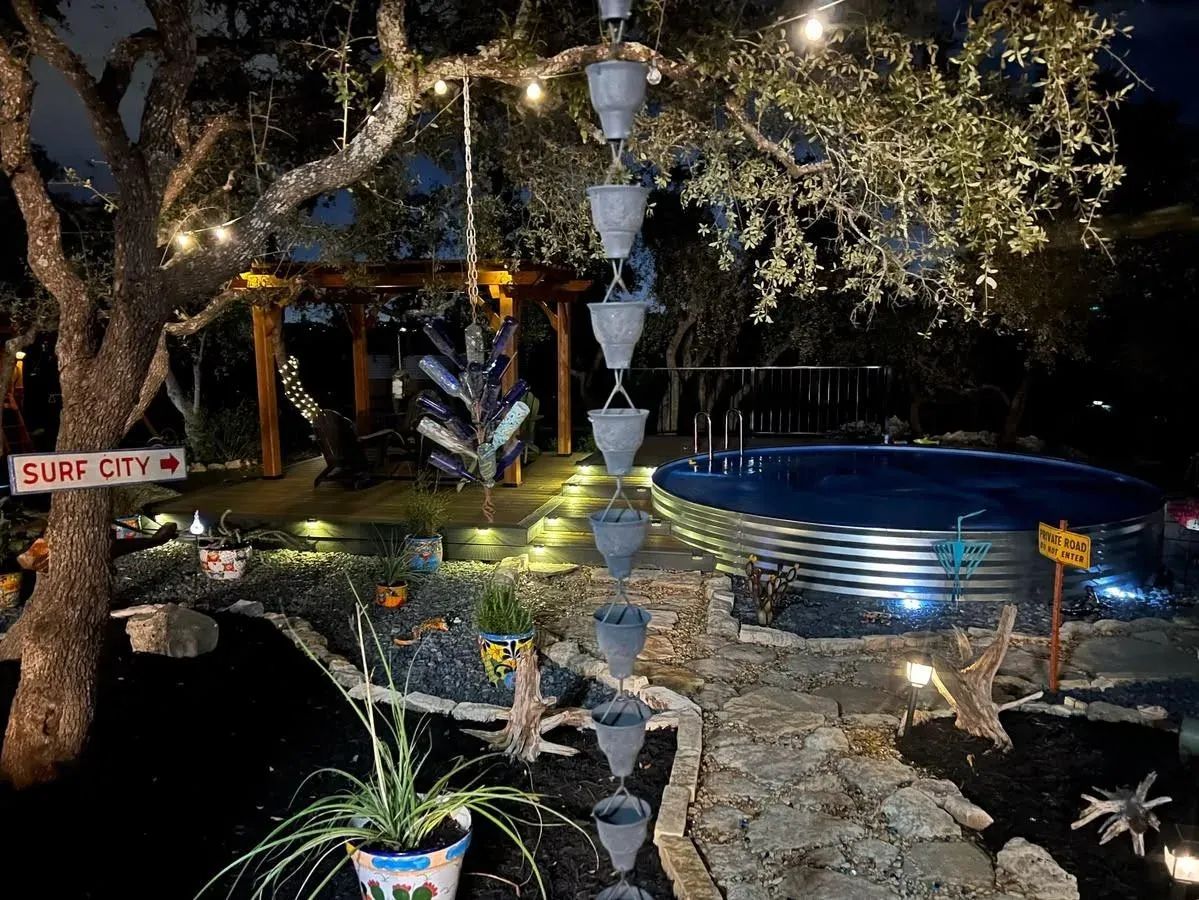
An odd-shaped yard is easier to design around when you lean into the curve. A gravel ring or a curved paver path around the pool softens hard fence lines and keeps grass clippings out of the water. Tall ornamental grasses or hydrangeas fill the leftover corners, and a small pergola in the widest pocket adds shade without crowding the pool.
### Using Decking and Landscaping to Create a Built-In Look
A deck changes how a tank pool reads. Without one, even a well-built steel pool looks like it was simply placed in the yard; with one, it starts to feel like part of the house. A full wraparound deck gives the most built-in look and turns the pool edge into a place to sit with your feet in the water. If the budget or the space is tight, a half-moon deck on one side works just as well, giving you a spot for a couple of chairs and an easy way in and out of the pool.
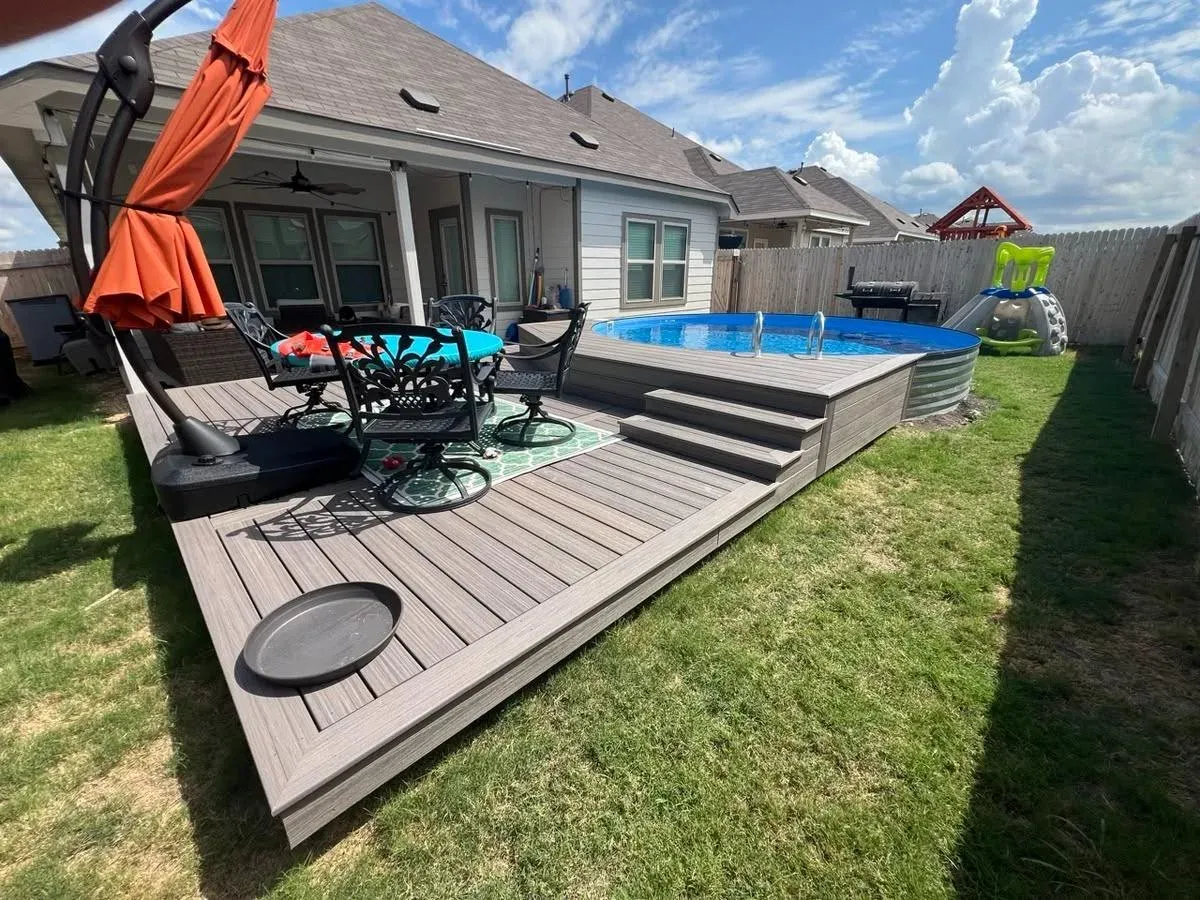
Partly sinking the pool takes this a step further. When the pool sits a foot or two into the ground, the deck can be built lower, which means fewer steps, less material, and a cleaner line from the house to the water. Composite boards hold up well around pools and need little upkeep, while natural wood feels warmer underfoot and blends more easily with the garden. Planting low shrubs or grasses along the exposed side of the wall finishes the look and hides the steel where the deck doesn't reach.
## Can You Install a Round Pool on a Sloped or Uneven Backyard?
Yes, but the ground under the pool has to be perfectly level. Shimming one side with blocks is a mistake, because uneven pressure stresses the walls and wrinkles the liner. The usual fix is to cut into the high side of the slope instead of building up the low side.
On a sloped lot, this is where a tank pool shows its flexibility. It can sit fully above ground, be partly buried on the uphill side, or be recessed completely, with a short retaining wall holding back the soil. A compacted base of masonry sand and a protective underlayment beneath the liner finish the job, so the excavation and leveling are worth leaving to an experienced crew.
## Final Thoughts: Making the Most of Your Backyard With a Round Pool
A narrow or oddly shaped yard doesn't rule out a pool. It simply calls for a shape that respects the space, and a circle does that better than most. It uses less ground, leaves room for living around the water, and adapts to slopes, trees, and tight property lines.
If you're weighing your options, StainlessSwim offers custom tank pools with full project management, from the first measurements and excavation to plumbing, decking, and the final fill. Smaller projects can be ready in as little as three days. You choose the size, depth, and placement, and their team turns an awkward corner of the yard into the spot everyone wants to spend the summer.